
Padel vs Paddle Tennis: What's the Difference?
Updated 6 August 2026. Corrected several factual errors: padel rackets have no strings (the comparison table said otherwise), the paddle tennis court dimensions and net height were platform tennis figures, the APTA governs platform tennis rather than paddle tennis, and the reference to World Padel Tour standards has been removed — that tour merged into Premier Padel in 2023.
If you've recently searched for padel courts near me in the US, you might have run into something unexpected: paddle tennis. Despite the similar names, padel and paddle tennis are two very different sports. They share elements of tennis and squash, but they're played on different courts, with different rules, and have separate histories.
Let's break down the differences so you know exactly what to look for next time you want to book a match.
Court size and structure
One of the biggest differences between padel and paddle lies in the court design.
| Feature | Padel | Paddle tennis (POP Tennis) |
|---|---|---|
| Court size | 33 ft x 66 ft (10m x 20m), enclosed | 20 ft x 50 ft, open |
| Court walls | Glass & mesh, used in play | None |
| Net height | 34.6 in at center | 31 in at center |
| Indoor/outdoor | Indoor and outdoor | Usually outdoor |
A padel court is smaller than a tennis court, but not dramatically so — 10m x 20m against tennis's 10.97m x 23.77m. What makes padel far cheaper to build is the much smaller run-off space required around the playing area, since the walls contain the ball.
Equipment differences
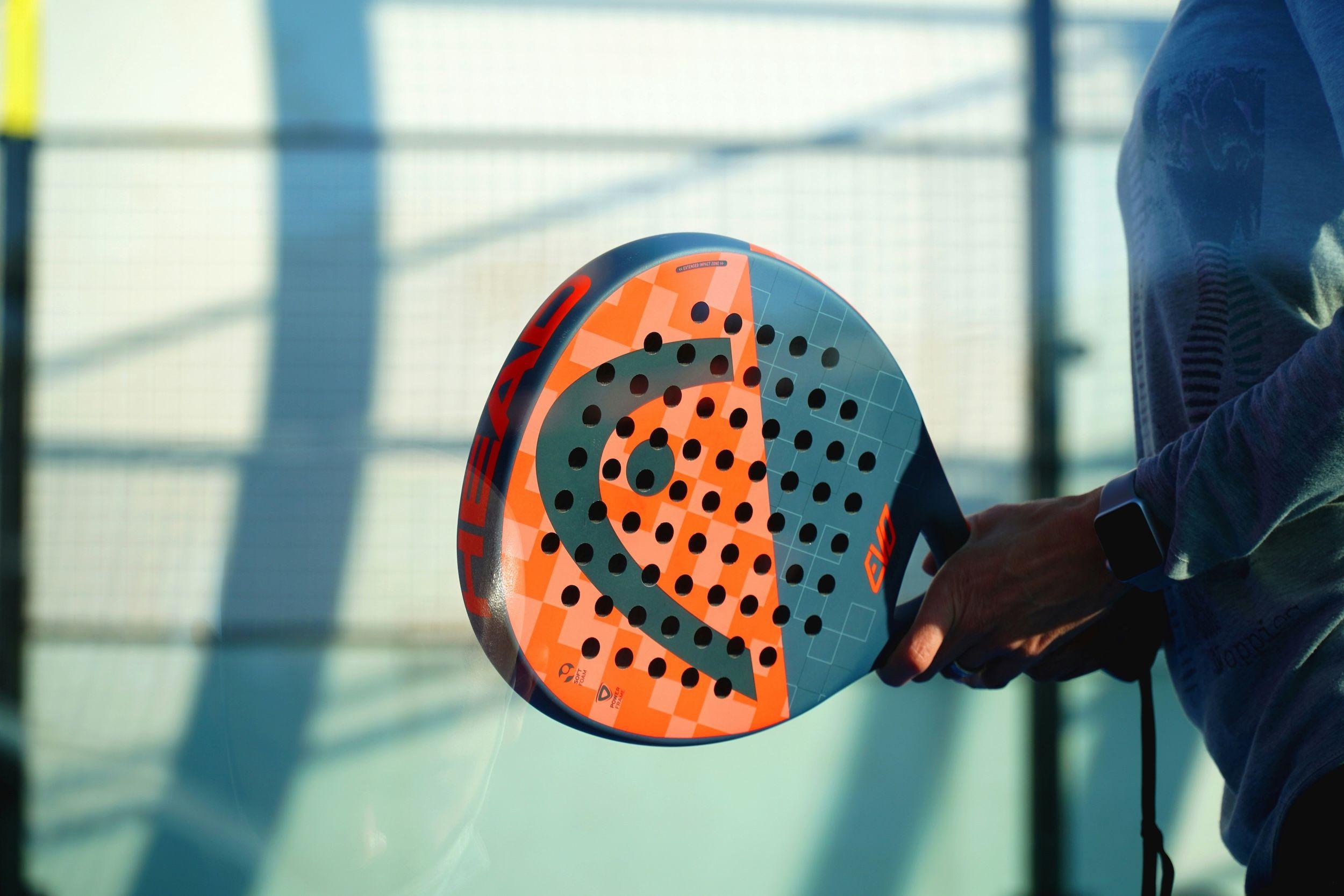
Even the rackets and balls used in the two sports are not the same.
| Equipment | Padel | Paddle tennis |
|---|---|---|
| Racket | Solid and perforated, no strings, max 38mm thick | Solid with holes, no strings |
| Ball | Like a tennis ball, slightly lower pressure | Depressurized or low-compression tennis ball |
| Shoes | Padel or tennis shoes | Tennis shoes |
Neither sport uses a strung racket. Padel rackets are a solid composite with a perforated face and a mandatory wrist cord; from 2026 those perforations no longer have to be circular, provided they stay at or under 20mm.
Rules and gameplay
While both use standard tennis scoring, gameplay varies significantly.
| Aspect | Padel | Paddle tennis |
|---|---|---|
| Players | Doubles only (2 vs 2) | Singles and doubles, doubles dominant |
| Serve | Underhand, must bounce first | Underhand |
| Wall play | Integral to play | Not used |
| Style of play | Fast, strategic, long rallies | Compact, closer to mini-tennis |
One padel-specific wrinkle: at 40–40 there are now three possible formats, since the FIP added the Star Point in 2026. See how padel scoring works.
Origins and popularity
| Category | Padel | Paddle tennis |
|---|---|---|
| Origin | Acapulco, Mexico, 1969 | USA, early 1900s |
| Popular regions | Spain, Argentina, Sweden, US | California, Northeastern US |
| Growth in the US | Rapid (Florida, Texas, California) | Mostly regional |
| Governing body | International Padel Federation (FIP) | POP Tennis Association and local bodies |
Padel was invented by Enrique Corcuera at his home in Acapulco in 1969. Paddle tennis traces to the early twentieth century in the US and was substantially reformatted by Murray Geller in 1959; it was renamed POP Tennis in recent years.
Common confusion in the US
Many US players hear "paddle" and think of platform tennis, POP tennis, or beach paddleball — but padel is its own sport, with global reach and a distinct identity.
Tips to avoid the mix-up:
- If the court has glass walls, it's padel.
- Played outdoors in winter on a raised, heated deck? That's platform tennis.
- Check whether the venue references the FIP or Premier Padel — those are padel's governing body and top professional circuit.
Is platform tennis the same as padel?
No. Platform tennis is played outdoors through the winter on a small raised deck, 20 ft by 44 ft, surrounded by taut wire screens roughly 12 ft high, with a solid paddle and a firm flocked rubber ball. Heaters underneath melt snow through the grated deck. It is governed in the US by the American Platform Tennis Association (APTA).
Padel is played on a larger enclosed court with glass walls and a depressurised tennis ball, and the walls are part of the rally rather than a boundary. The two share almost nothing beyond being racket sports played in pairs.
Note that APTA governs platform tennis specifically — not paddle tennis or POP Tennis, which are separate sports with their own organisations. The overlapping names are the root of most of the confusion.
Where to find padel courts in the US
Padel is growing fast in many major US cities, with more than 1,000 courts now open nationwide:
You can also browse all padel courts across the country.
While they might sound similar, padel and paddle tennis are two very different games. Padel is fast-paced, glass-walled, and global. Paddle tennis is compact, classic, and regional. Now that you know the difference, you'll know exactly where to book your next match.
New to the sport? Start with what is padel.