
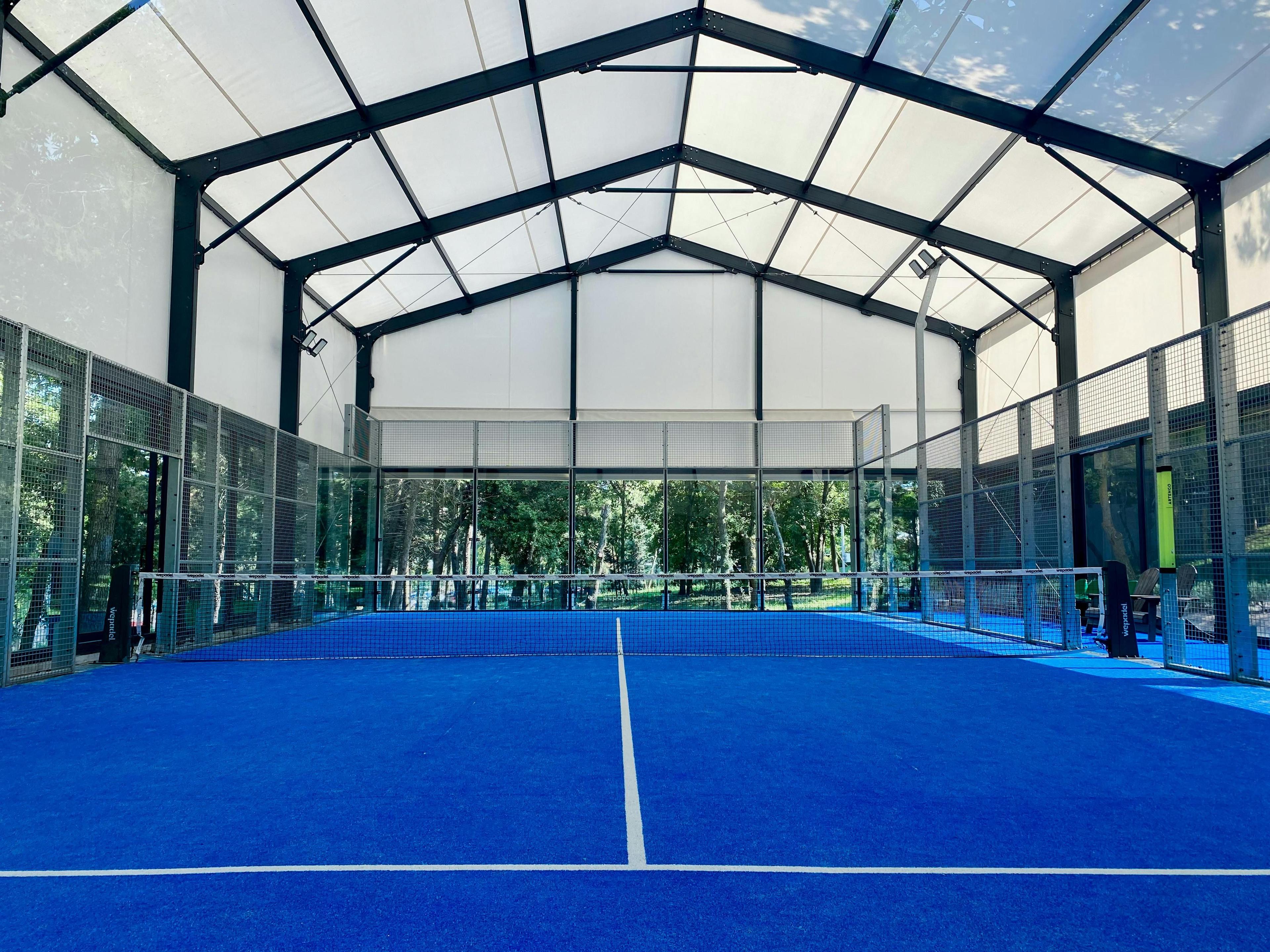
Pro Padel League CEO wants free public courts as US padel faces an access problem
Padel's next big US growth problem may not be awareness. It may be access.
In a feature published August 16 by The Sporting Tribune during the Pro Padel League's Los Angeles stop, PPL CEO Mike Dorfman acknowledged a basic problem with the American market - court time, memberships and equipment can still be expensive. He also described a bigger ambition: free public padel courts across the country, including in places such as Central Park.
That shifts the conversation around US padel. For the past few years, the focus has been expansion - new clubs, more courts, investors and professional events. The next phase may be about who can actually get on court.
US padel is still premium-heavy
The Sporting Tribune reported that the average US padel court booking costs about $92 per session. Prices vary by city, venue and time of day, but padel in the US is still often sold as a premium experience.
Many early venues have opened in affluent neighborhoods, private clubs, hotels and high-end social concepts. That has helped finance rapid growth, but it can also make the sport feel less accessible than basketball, tennis or pickleball.
We covered the other side of that trend in Padel is becoming the new golf for American country clubs. Private clubs and professional networks are helping introduce padel to new players, but they do not solve the public-access gap.
Dorfman's Central Park example points in the opposite direction - padel as public recreation rather than a members-only amenity.
There is no announced Central Park project or timeline. The idea was presented as a long-term vision, not a confirmed development. Still, hearing the CEO of North America's biggest professional padel league make public access part of the growth story is significant.
PPL is pushing padel into the mainstream
The access comments come as the Pro Padel League expands its visibility in the US.
Its 2026 season includes five events across North America, with stops in New York, Los Angeles, Playa del Carmen and Guadalajara before the City's Cup Finals in Miami in December. PPL also secured its first national US television package for 2026, with championship matches carried on CNBC through a partnership with USA Sports.
Professional exposure can create demand faster than local court supply can catch up. A national broadcast can introduce padel to someone in a city with only a handful of courts - or no convenient public option at all.
More courts are not enough on their own
The US has crossed the 1,000-court mark, based on the latest market counts in our summer 2026 US padel update. But raw court count only tells part of the story.
A court inside a private residential development is not the same as a public court in a city park. A membership-only club serves a different audience from one that can be booked casually by four friends.
For padel to reach a much larger US audience, the market will probably need a mix of private clubs, commercial operators, country clubs, schools, parks and public recreation departments.
Public courts could change discovery
The biggest advantage of public courts is not only price - it is visibility.
A padel court in a busy park puts the sport in front of people who were not already searching for it. The glass walls make the game easy to watch, the doubles format makes it social, and beginners can understand the basic idea quickly.
Right now, many Americans still discover padel through friends, travel, private clubs or social media and then have to search for somewhere to play. More public courts could reverse that funnel.
Access may be the next big US padel race
PPL's growth and national TV coverage show that professional padel is becoming more serious in North America. But the long-term size of the recreational market will depend on something simpler - whether ordinary players can find a nearby court at a price they are willing to pay.
Dorfman's vision of free public courts is still just that - a vision. But it identifies one of the most important questions facing padel in the US right now.
Want to play? Browse padel courts and clubs near you, or start with our guide to what padel is and how the game works.
Sources
- How an accident in Mexico is tearing down walls around the globe - The Sporting Tribune, August 16, 2026
- Pro Padel League Announces Broadcast Partnership With USA Sports for 2026 Season - Pro Padel League
- Pro Padel League Announces 2026 Season Schedule Featuring Five Events Across North America - Pro Padel League