
Your first padel match: what to wear, bring and expect
Your first padel match should feel more like a fun hour with friends than an exam. You do not need a powerful smash, an expensive racket or a complete knowledge of the rulebook. You need four players, a booked court, comfortable kit and a few basic habits.
This guide covers what to arrange, what to carry and what to do once you step onto the court.
First padel match checklist
- Court reservation: Confirm the location, session length, cost, cancellation terms and check-in instructions.
- Four players: Standard padel is doubles - two players on each team. Ask about beginner mixers or open matches if you need partners.
- Racket: Ask whether the club rents or lends padel rackets before buying one.
- Balls: Confirm whether balls are provided. Padel balls are not interchangeable with every tennis ball.
- Footwear: Choose court shoes with appropriate grip and side-to-side support for the venue's surface.
- Clothing: Comfortable sportswear that lets you lunge, turn and raise your arms.
- Water and towel: Bring enough for the session and local temperature.
- A few spare minutes: Aim to arrive around 10 to 15 minutes early to find the court and get organized.
For finding a nearby venue, browse US padel courts by state and city. Availability and rental policies vary, so verify directly with the club.
What should you wear to play padel?
You can begin with ordinary breathable workout clothing. A T-shirt and shorts, leggings or a sports skirt are all fine if they allow unrestricted movement. Padel is full of short sprints, reaching and rotations, so prioritize comfort.
Shoes deserve more attention. Running shoes are designed primarily for forward movement; padel asks you to brake and cut sideways. Choose suitable court shoes with lateral support and a sole that works with the court's actual surface. If unsure, ask the club which shoes it recommends. The Padel Federation Ireland injury-prevention guide explains why lateral support and a gradual warm-up matter.
You can leave the specialist accessories at home for the first session. If you enjoy the game, an overgrip or your own racket might become useful later.
What happens when you arrive?
A typical first visit goes like this:
- Check in and find your assigned court. Confirm whether your booking includes equipment.
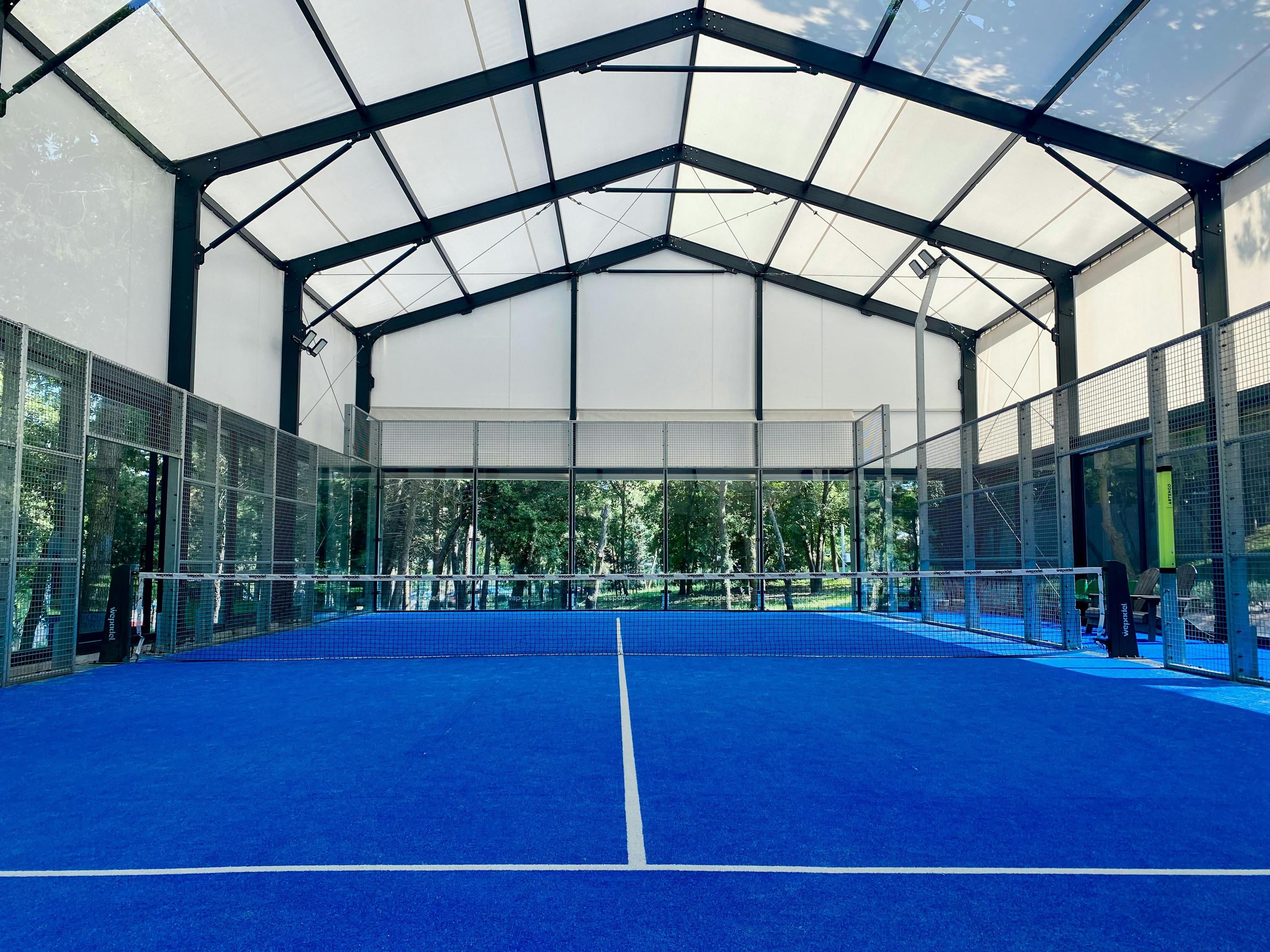
- Get familiar with the enclosure. Notice the glass back wall, side walls, net and two service boxes on each half.
- Secure the racket's wrist cord. It is a safety requirement in the official game.
- Warm up gradually. Start with gentle movement and easy rallies before sharper changes of direction or overheads.
- Agree on the format. Decide whether to keep a friendly score, change partners or focus simply on rallying.
If nobody in the group has played before, one introductory lesson can save a lot of confusion. You can also read our plain-English guide to what padel is before arriving.
The five rules you need for game one
You do not need to memorize every possible wall rebound. Start here:
- Play doubles. You and your partner share your half of the court.
- Serve underhand after a bounce. Hit at or below waist height, diagonally into the receiving service box. The server must follow the official foot-position rules.
- Let the serve bounce before returning it. You cannot volley the return of serve.
- Use the glass after the bounce. A ball can rebound from the back glass or suitable side wall and remain playable; letting it bounce twice on your side loses the point.
- Count points in the familiar tennis sequence. The basic count is 15, 30, 40, game. Agree on the deuce format used for your session.
Our more detailed articles explain the padel serve, padel scoring and the official 2026 rules for beginners.
Three beginner tactics that make the first match better
1. Keep the ball in play rather than hitting harder
A slow, controlled return is usually more valuable than a winner attempt that lands in the glass or net. Focus on getting the ball over with space above the net.
2. Move with your partner
When one of you moves forward, the other should try to stay connected rather than leaving half the court unprotected. Call "mine" or "yours" early to avoid collisions and last-second indecision.
3. Give the back glass a chance to help
It is tempting to attack every deep ball before it reaches the back wall. Sometimes letting it bounce, hit the glass and return toward you produces a much easier shot. Practice this slowly during warm-up.
As you improve, try our guide to playing against stronger opponents for practical choices on positioning, lobs and shot selection.
How long should you book for the first time?
A session around 60 to 90 minutes gives you room to check in, warm up, learn the basics and enjoy some rallies. This is a practical recommendation, not an official match duration; beginner coaching sessions and venue booking blocks vary.
For your first booking, ask these questions:
- Is the advertised price per court or per player?
- Are rackets and balls included?
- Is it an indoor or outdoor court?
- Does the club offer a beginner introduction or a social session?
- What happens if you need to cancel or the weather is poor?
If prime-time slots are unavailable, look for off-peak hours and beginner group sessions. We explain more options in why booking a padel court can be difficult.
First-time padel questions
Do I need to know tennis? No. Tennis experience can help with hand-eye coordination, but the enclosed court, underhand serve and wall rebounds make padel its own sport.
Can I play alone? An official doubles match needs four players. Clubs may offer open games, partner matching, group lessons or practice opportunities.
What if the ball hits the glass? It depends on the order of the bounce and which side it is on. During a rally, the wall can be part of a legal return. If you are unsure, replay a friendly point and check the rules later.
Should I buy a racket before the first match? Not necessarily. See our guide to choosing a padel racket when you are ready to compare shapes, weight and comfort.
Ready to get on court?
The best first match is one where everyone understands the basics, stays safe and wants to book another. Start by finding a court on WhatThePadel.com, confirm the club's rental and booking details, and take the pressure off yourself. A few long rallies are a bigger win than one spectacular smash.
Rules reference: FIP Rules of Padel, applicable from January 1, 2026. Always follow your venue's safety instructions and the format for your booked session.